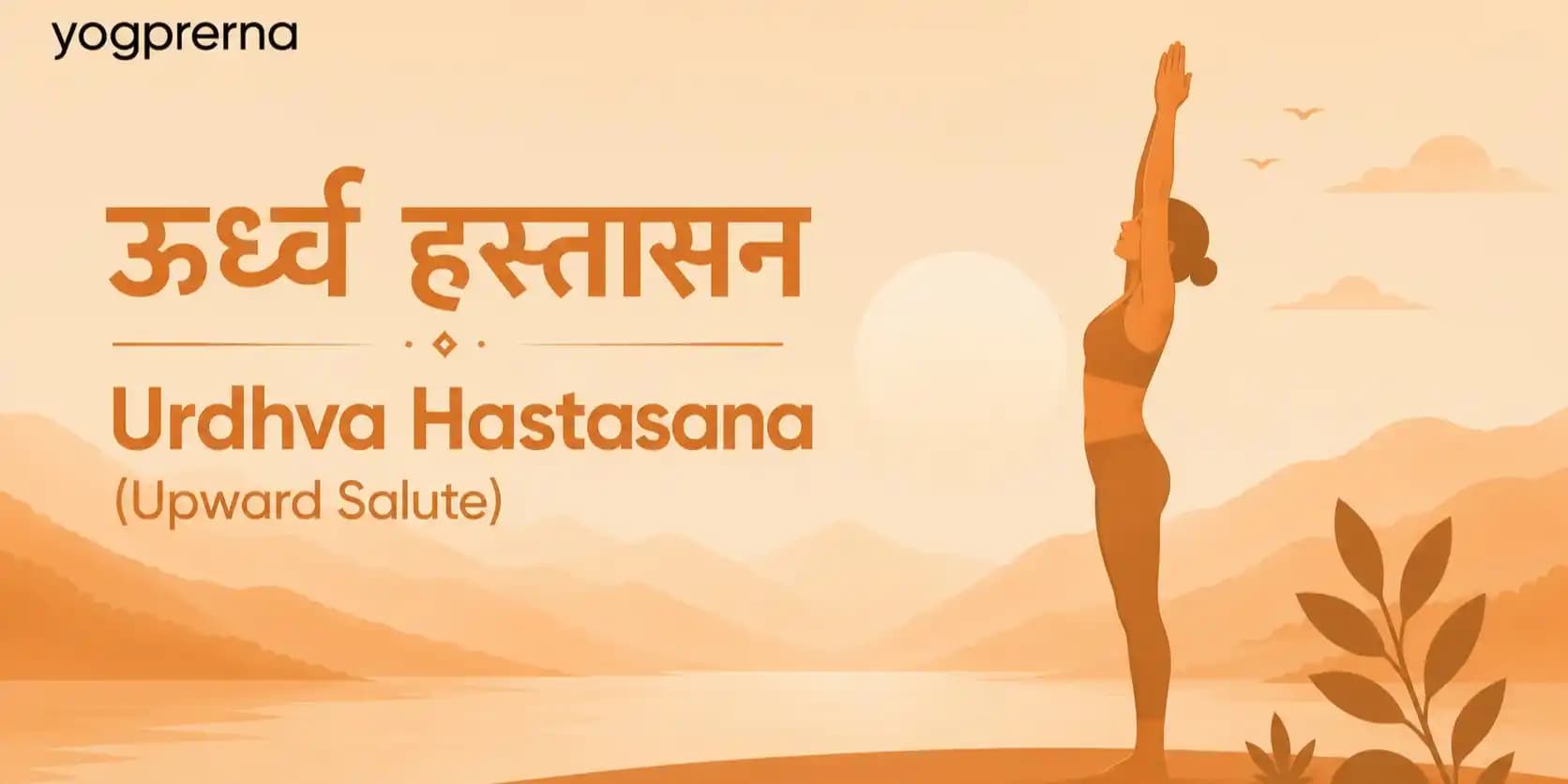
Urdhva Hastasana
Urdhva Hastasana, often practiced as the second posture in Sun Salutations (Surya Namaskar), is an upward full-body extension that lengthens the spine and expands the thoracic cavity.
To execute the pose, begin in Tadasana (Mountain Pose). Inhale deeply as you sweep your arms out to the sides and reach up toward the ceiling. Turn your palms inward to face each other, or press your palms together if your shoulder mobility permits without hunching. Keep your shoulders drawn down away from your ears, activate your core, and gently tilt your head back to gaze softly up at your thumbs. Ensure your lower back remains long without excessive arching, grounding firmly through both feet while reaching high through the fingertips.
Upward Salute (Urdhva Hastasana) is a standing yoga pose that involves raising the arms overhead while lengthening the spine and reaching upward through the fingertips. It is commonly practiced in the Sun Salutation (Surya Namaskar) sequence and helps improve posture, balance, and full-body awareness.
Upward Salute stretches the shoulders, chest, abdomen, and spine while strengthening the legs and core. It helps improve posture, increases flexibility, encourages deep breathing, and promotes better balance and body alignment. The pose also energizes the body and prepares it for more advanced standing postures.
Stand tall with your feet together or hip-width apart. Inhale as you raise both arms overhead with your palms facing each other or touching. Keep your shoulders relaxed, lengthen your spine, engage your core, and gently lift your chest. Hold the position while breathing steadily, then exhale and slowly lower your arms.
Yes. Upward Salute is one of the most beginner-friendly yoga poses. It teaches proper standing alignment, improves posture, and helps beginners develop body awareness. New practitioners can keep their hands shoulder-width apart if joining the palms feels uncomfortable.
Most practitioners hold Upward Salute for 3–10 deep breaths or about 20–60 seconds. During dynamic yoga flows like Surya Namaskar, the pose is usually held for one full inhalation before transitioning to the next posture.
Upward Salute stretches the shoulders, chest, abdomen, sides of the torso, and spinal muscles. It strengthens the legs, core, back muscles, and shoulders while encouraging proper posture and full-body engagement.
Upward Salute is commonly associated with the Anahata (Heart Chakra) because it opens the chest, and with the Vishuddha (Throat Chakra) due to the upward extension of the upper body. Some yoga traditions also associate it with the Sahasrara (Crown Chakra) because of the upward-reaching movement and sense of expansion.
Common mistakes include shrugging the shoulders toward the ears, arching the lower back excessively, locking the knees, collapsing the chest, and forcing the palms together. Keeping the core engaged and the spine long helps maintain proper alignment.
Yes. Regular practice of Upward Salute strengthens the postural muscles, lengthens the spine, opens the chest, and encourages proper shoulder alignment. These benefits can help reduce the effects of prolonged sitting and improve overall posture.
Upward Salute is best practiced in the morning as part of a yoga routine or Surya Namaskar. However, it can also be performed anytime during the day to relieve stiffness, improve posture, and gently energize the body.