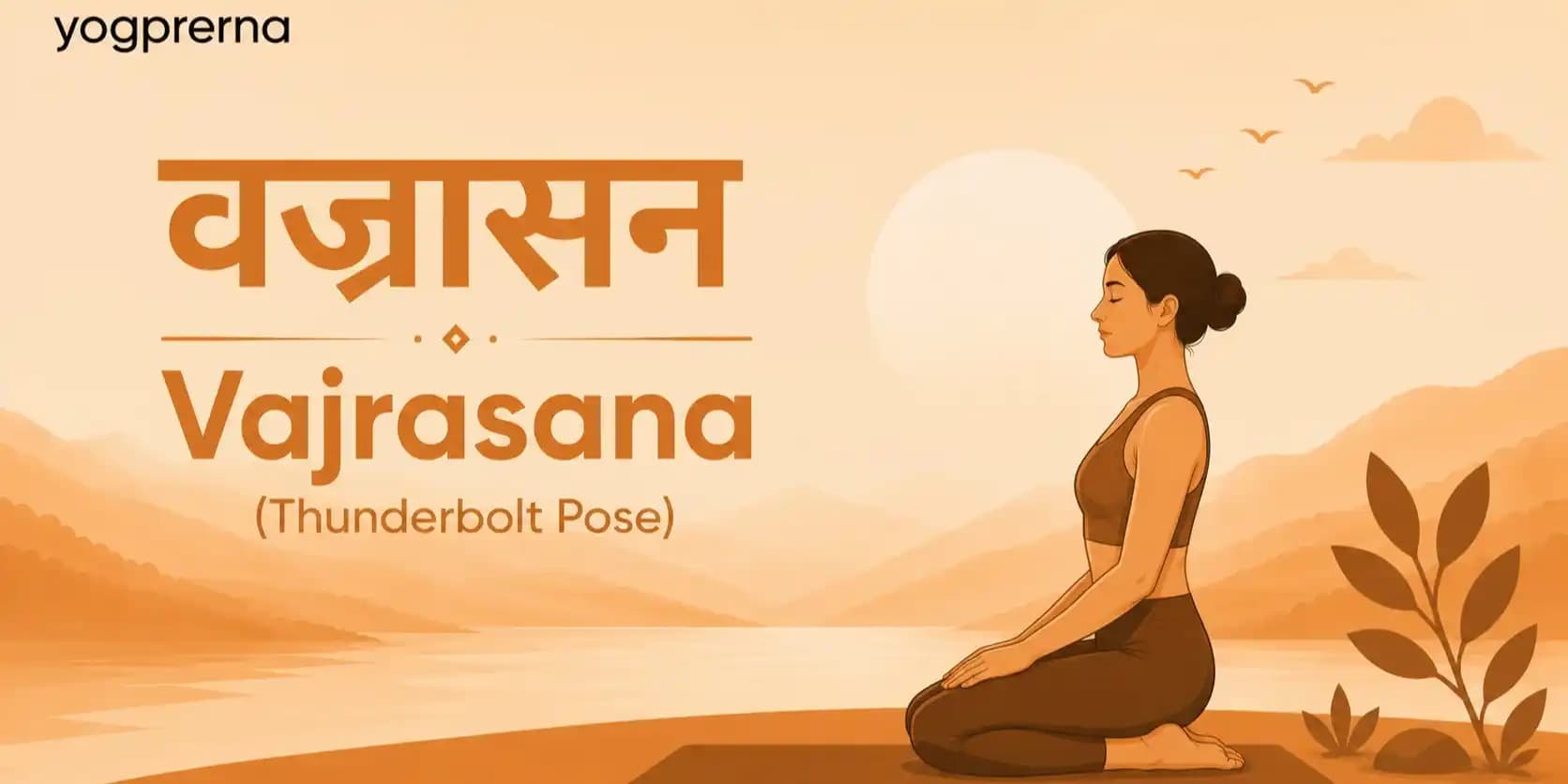
Vajrasana
Vajrasana, derived from the Sanskrit word Vajra (meaning "thunderbolt" or "diamond"), is a foundational kneeling posture celebrated for its profound grounding and restorative properties. Uniquely set apart from almost all other yoga postures, Vajrasana is safe—and highly encouraged—to practice immediately following a meal. By altering blood circulation pathways in the lower body, it serves as an exceptional posture for digestive wellness, spinal stabilization, and deep pranayama practice.
The lower body formation begins with the legs folded back beneath the torso. The knees press together while the feet lie flat on the floor with tops resting against the mat. The big toes touch, while the heels separate slightly outward to form a natural "cup" or seat that cradles the sitting bones. The body's entire weight distributes evenly across the shins, ankles, and tops of the feet.
The upper body remains effortlessly tall and erect, removing unnecessary load from the lumbar region. The pelvis rests in a neutral tilt, stacking the ribcage directly over the hips. The chest opens naturally without pushing the front ribs outward, and the shoulders roll back and slide down away from the ears.
The hands rest comfortably on the knees or thighs with palms facing down, grounding the mental state and closing the energetic circuit. The neck extends upward with the chin remaining parallel to the floor, allowing the crown of the head to reach toward the sky. The gaze stays soft or the eyes close gently, directing the breath deep into the lower abdomen.
By compressing blood flow to the lower legs and thighs, it redirects a higher volume of oxygenated blood toward the stomach and abdominal organs, stimulating peristalsis and alleviating bloating or indigestion.
Keeps the vertebral column neutrally aligned without straining the lower back, reinforcing healthy posture and relieving sciatica symptoms.
Tones the pelvic floor muscles, strengthens the ankles, and stretches the quadriceps and plantar fascia of the feet.
Provides a firm, symmetrical base that stabilizes the nervous system, making it an ideal alternative to cross-legged postures like Padmasana (Lotus Pose).
Alignment Note: Avoid letting the ankles roll outward or forcing the buttocks all the way down between the feet (which shifts the pose into Supta Virasana/Hero Pose). The sitting bones must rest directly on the inner soles/heels of the feet to maintain proper joint safety in the knees and ankles.
| Variation | Purpose | Description |
|---|---|---|
| Block-Supported Kneeling | Ankle & knee pressure relief | Placing a yoga block or blanket between the feet under the sitting bones relieves compression on tight knees and stiff ankle joints. |
| Supta Vajrasana | Advanced front-body stretch | Reclining backward onto the elbows or flat onto the back from Vajrasana deepens the stretch through the quadriceps, psoas, and abdominal wall. |
| Toe-Tucked Kneeling | Plantar fascia opening | Tucking the toes under so the weight rests on the toe mounds delivers an intense, therapeutic stretch to the soles of the feet and Achilles tendons. |
Vajrasana (Thunderbolt Pose) is a traditional kneeling yoga posture in which you sit back on your heels with your spine upright and your hands resting on your thighs. It is one of the few yoga poses that can be comfortably practiced after meals and is commonly used for meditation, pranayama, and mindfulness practices.
Vajrasana helps improve posture, supports healthy digestion, strengthens the muscles of the back and legs, and encourages slow, deep breathing. It also promotes mental calmness, enhances body awareness, and serves as a stable posture for meditation and breathing exercises.
Begin by kneeling on the floor with your knees together or slightly apart. Bring your big toes together and separate your heels slightly to create a comfortable seat. Sit back on your heels, keep your spine straight, relax your shoulders, place your hands on your thighs, and breathe naturally while maintaining the posture.
Yes. Vajrasana is a beginner-friendly yoga pose that is easy to learn and practice. If sitting on the heels feels uncomfortable, beginners can place a folded blanket or yoga block between the heels and hips for additional support.
Beginners can hold Vajrasana for 2–5 minutes and gradually increase the duration to 10–15 minutes as comfort improves. When practiced after meals for digestion, 5–10 minutes is commonly recommended.
Vajrasana gently stretches the ankles, feet, knees, and quadriceps while strengthening the muscles that support the spine and improving postural stability. It also encourages proper alignment of the hips and pelvis.
Vajrasana is commonly associated with the Muladhara (Root Chakra) because it promotes stability, grounding, and balance. Some yoga traditions also associate it with the Manipura (Solar Plexus Chakra) due to its connection with digestion and inner vitality.
Common mistakes include slouching the back, rounding the shoulders, leaning forward, placing excessive pressure on the knees, and holding the breath. Maintaining an upright spine, relaxed shoulders, and steady breathing helps ensure proper alignment.
People with recent knee injuries, severe arthritis, ankle injuries, or recent surgery involving the knees or lower legs should practice Vajrasana with caution or under the guidance of a qualified yoga instructor. Using cushions or blankets can reduce pressure on the knees and ankles.
Yes. Vajrasana is traditionally practiced after meals because it encourages an upright posture that may support comfortable digestion. While many practitioners find it beneficial, it should be viewed as a supportive yoga practice rather than a medical treatment for digestive disorders.