Bharmanasana
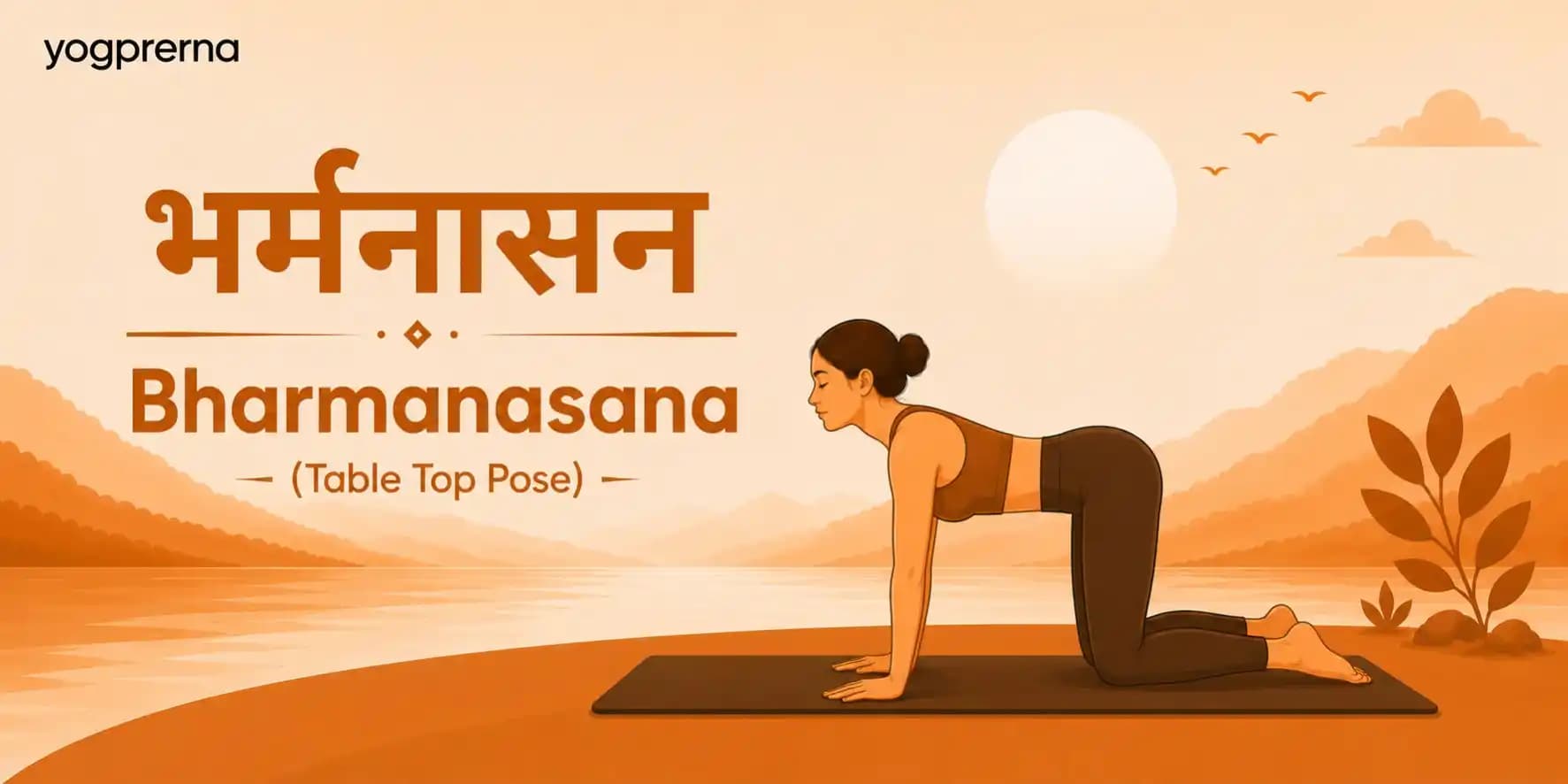
Bharmanasana—commonly known as Table Top Pose—is a foundational quadruped posture in which the hands and knees support the body while the spine is held in a neutral, stable position. The name reflects the shape of the body, resembling the level surface of a table. Often used as a starting position for movements such as Marjaryasana (Cat Pose), Bitilasana (Cow Pose), and Bird Dog, Bharmanasana develops body awareness, spinal alignment, and coordinated movement while gently strengthening the core and supporting muscles.
The foundation of the posture is formed by the hands and knees, with the wrists positioned approximately beneath the shoulders and the knees beneath the hips. The fingers are spread comfortably with the palms pressing evenly into the floor, creating a stable base through the hands and forearms.
The spine remains long and neutral rather than excessively arched or rounded. The head follows the natural extension of the spine, with the gaze directed toward the floor slightly ahead of the hands. The shoulders remain broad and away from the ears while the shoulder blades stay controlled against the rib cage. The abdomen is gently engaged to support the lumbar spine without holding the breath.
The hips remain stacked over the knees, and the thighs are positioned vertically toward the floor. The tops of the feet may rest on the mat with the toes pointing backward. Weight should be distributed evenly between both hands and both knees, preventing excessive pressure from accumulating in the wrists or knees. The pelvis remains level as the practitioner maintains a steady, balanced tabletop shape.
Gentle abdominal engagement activates the deep core muscles and helps develop stability around the spine and pelvis.
Maintaining a neutral spine teaches controlled alignment and provides a stable foundation for spinal flexion, extension, and rotational movements.
Pressing the hands into the floor engages the shoulders, arms, wrists, and upper back while developing strength and weight-bearing control.
Keeping the hips aligned over the knees encourages controlled activation of the glutes and hip-supporting muscles while improving awareness of pelvic position.
Alignment Note: A common tendency is to allow the lower back to collapse toward the floor or to round the upper back excessively. Keep the abdomen gently engaged, press evenly through the palms, and maintain a natural curve through the spine. Avoid locking the elbows or allowing the shoulders to sink toward the ears. The movement should feel stable and controlled rather than forced.
| Variation | Purpose | Description |
|---|---|---|
| Supported Table Top | Wrist and knee comfort | Place a folded blanket beneath the knees or use additional support beneath the palms to reduce pressure while learning the basic alignment. |
| Dynamic Cat-Cow | Spinal mobility & warm-up | From Bharmanasana, alternate between gently rounding the spine into Marjaryasana and extending the spine into Bitilasana while coordinating each movement with the breath. |
| Bird Dog | Balance & core stability | From the tabletop position, extend one arm forward and the opposite leg backward while keeping the hips level and spine stable. Return to the starting position and repeat on the opposite side. |
Bharmanasana (Tabletop Pose) is a foundational yoga posture in which the practitioner comes onto the hands and knees, keeping the wrists beneath the shoulders and the knees beneath the hips. It creates a stable foundation for several yoga movements and is commonly used as a starting position for poses such as Cat-Cow and Bird Dog.
Bharmanasana helps improve spinal alignment, core stability, balance, and body awareness. It gently strengthens the wrists, arms, shoulders, abdomen, and back while preparing the body for more dynamic yoga movements.
Start on your hands and knees. Place your wrists directly under your shoulders and your knees under your hips. Keep your fingers spread and press your palms into the mat. Maintain a neutral spine, engage your core gently, keep your neck aligned with the spine, and look toward the floor.
Yes. Bharmanasana is an excellent pose for beginners because it is simple to learn and provides a stable foundation for many other yoga postures. It also helps beginners understand proper spinal and shoulder alignment.
Bharmanasana can generally be held for 20–60 seconds or 5–10 steady breaths. It may also be maintained for longer periods when used as a starting or resting position during a yoga sequence.
Bharmanasana engages the core, shoulders, arms, wrists, back, and hips. Although it is not an intense strengthening pose, maintaining proper alignment activates the muscles that support the spine and helps develop stability.
Bharmanasana is commonly associated with the Muladhara (Root Chakra) because the posture creates a stable and grounded base. Its emphasis on core stability may also be connected with the Manipura (Solar Plexus Chakra) in traditional yoga practices.
Common mistakes include placing the wrists too far forward or backward, allowing the lower back to collapse, rounding the shoulders, locking the elbows, and letting the knees move too far behind the hips. Maintaining a neutral spine and even weight distribution helps improve alignment.
People with significant wrist, knee, shoulder, or hand injuries should modify the pose or practice under the guidance of a qualified yoga instructor. A folded blanket under the knees or a wedge under the hands can provide additional support and comfort.
Yes. Bharmanasana teaches proper alignment of the shoulders, spine, pelvis, and hips. Regular practice can improve body awareness and help develop the core and back stability needed for better posture.