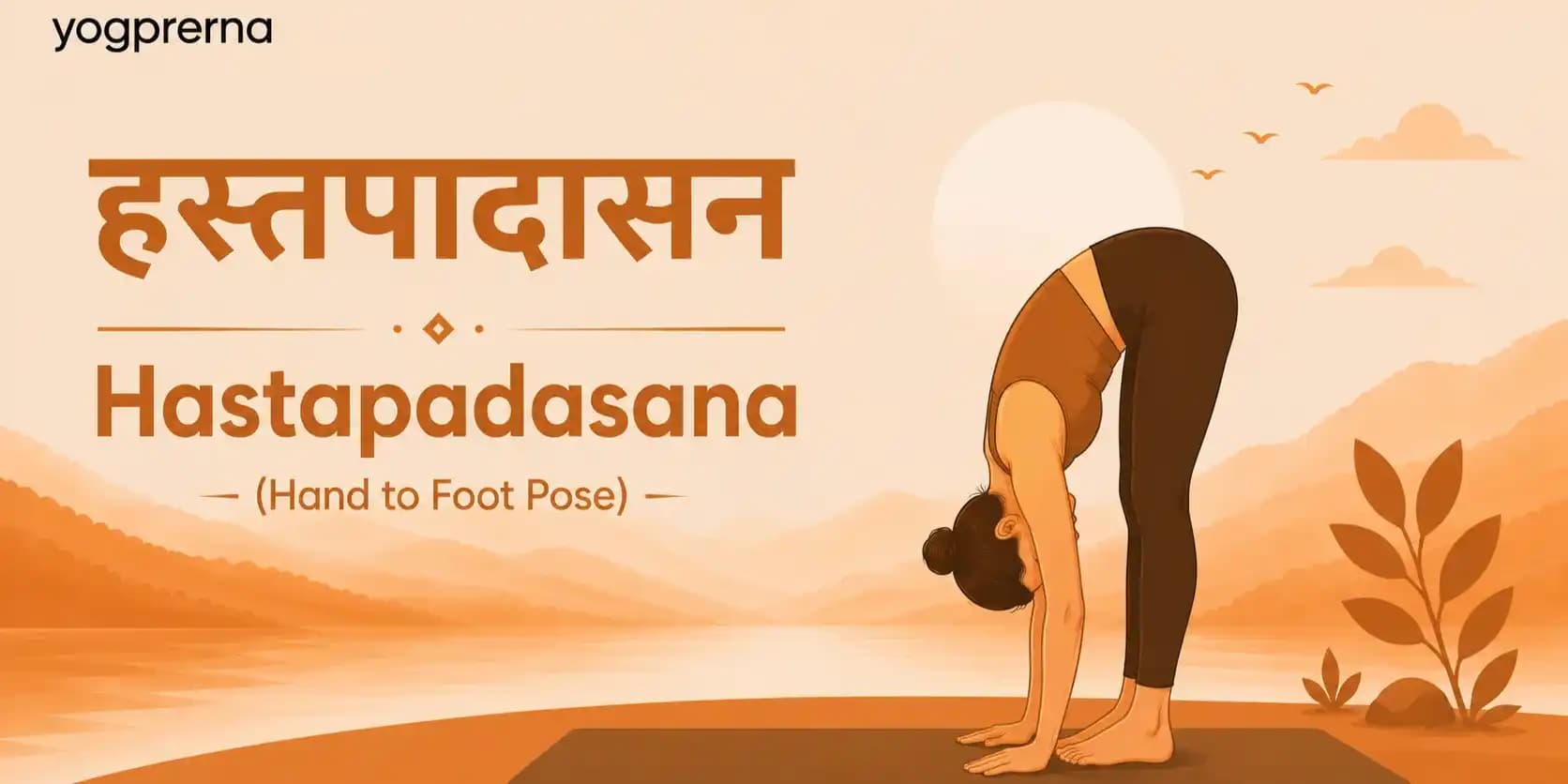
Hastapadasana
Hastapadasana—derived from Hasta (hand), Pada (foot), and Asana (pose)—is a foundational standing inversion and forward bend. Serving as a crucial third transition in traditional Surya Namaskar (Sun Salutations), it pairs spinal lengthening with deep hamstring releases. Beyond physical extension, the posture gently compresses the abdominal core while surrendering the crown of the head toward the earth, balancing physical engagement with mental grounding.
The foundation remains firmly rooted through both feet, spaced either together or hip-width apart. Weight distributes evenly across the four corners of the feet, with a slight forward shift into the ball mounds to keep the hips stacked directly over the ankles rather than leaning backward into the heels.
The forward fold originates exclusively from the hip joints (pelvis tilting forward) rather than rounding through the lumbar spine. As the torso cascades down over the legs, the quadriceps engage strongly to lift the kneecaps, encouraging the hamstrings and glutes to lengthen safely. The abdominal wall draws gently inward toward the spine, creating spatial clearance for a deeper fold.
The upper body releases into gravity without tension. The palms or fingertips rest flat on the floor beside the feet, or clasp around the calves or ankles depending on flexibility. The cervical spine lengthens as the head hangs freely between the upper arms, releasing shoulder tension and letting the gaze fall softly toward the shins or knees. Deep, steady inhalation into the posterior ribcage expands the back body, while exhalation deepens the release.
Deeply stretches the entire back line of the body, including the calves, hamstrings, glutes, and erector spinae muscles.
Gentle compression of the abdominal region stimulates the digestive viscera, aiding sluggish peristalsis and relieving constipation.
Placing the head below the heart increases cerebral blood circulation, helping lower stress, anxiety, and mild fatigue.
Counteracts chronic sitting by lengthening the intervertebral spaces along the lumbar and thoracic spine.
Alignment Note: Sacrificing spinal length just to reach the floor by rounding the mid-back puts excessive strain on the lumbar discs. Prioritize keeping a long torso and tilting the pelvis forward—bending the knees slightly is far more effective than forcing a rounded fold with straight legs.
| Variation | Purpose | Description |
|---|---|---|
| Micro-Bent Knees | Lumbar protection & tight hamstrings | Softening the knees releases hamstring tension immediately, allowing the pelvis to tilt forward cleanly while keeping the back flat. |
| Hands on Blocks | Elevated floor support | Placing two yoga blocks under the palms elevates the ground, giving hands firm grounding without compromising spine length. |
| Padahastasana | Deep palm-to-sole connection | Sliding the palms underneath the soles of the feet with toes resting at the wrist creases intensifies wrist and calf traction. |
Hastapadasana (Standing Forward Bend) is a standing yoga pose in which you bend forward from the hips and bring your hands toward or beside your feet while keeping the spine long. It is an important posture in Surya Namaskar (Sun Salutation) and helps improve flexibility, balance, and body awareness.
Hastapadasana stretches the hamstrings, calves, hips, and spine while strengthening the legs. It helps improve flexibility, supports healthy posture, relieves stiffness in the back, enhances balance, and promotes relaxation through the gentle forward fold.
Stand upright with your feet together or hip-width apart. Inhale and lengthen your spine. Exhale as you hinge forward from the hips, keeping your back long. Place your hands beside your feet, on the floor, or hold your ankles or calves according to your flexibility. Relax your neck, keep your weight evenly distributed between both feet, and breathe steadily before slowly returning to a standing position.
Yes. Hastapadasana is suitable for beginners when practiced with proper alignment. Beginners can keep a slight bend in the knees if their hamstrings are tight and avoid forcing the hands to the floor until flexibility improves.
Most practitioners hold Hastapadasana for 20–60 seconds or 5–10 deep breaths. In dynamic yoga sequences like Surya Namaskar, it is usually held for one or two breaths before moving into the next pose.
Hastapadasana stretches the hamstrings, calves, glutes, lower back, spine, and hips. It strengthens the thighs, knees, ankles, and core muscles while improving flexibility throughout the posterior chain of the body.
Hastapadasana is commonly associated with the Muladhara (Root Chakra) because it promotes grounding and stability. Some yoga traditions also associate it with the Svadhisthana (Sacral Chakra) due to the stretch through the hips and pelvic region.
Common mistakes include rounding the back instead of folding from the hips, locking the knees, forcing the forehead toward the legs, pulling excessively with the hands, and placing too much weight on the heels. Keeping the spine long and bending the knees slightly when needed helps maintain proper alignment.
People with severe lower back injuries, slipped discs, acute hamstring injuries, uncontrolled high blood pressure, glaucoma, or dizziness should practice with caution or under the guidance of a qualified yoga instructor. Those with limited flexibility can bend the knees or use yoga blocks for support.
Yes. Regular practice of Hastapadasana gradually improves flexibility in the hamstrings, calves, hips, and spine. Consistent practice also helps increase the range of motion in the lower body and reduces muscle stiffness.