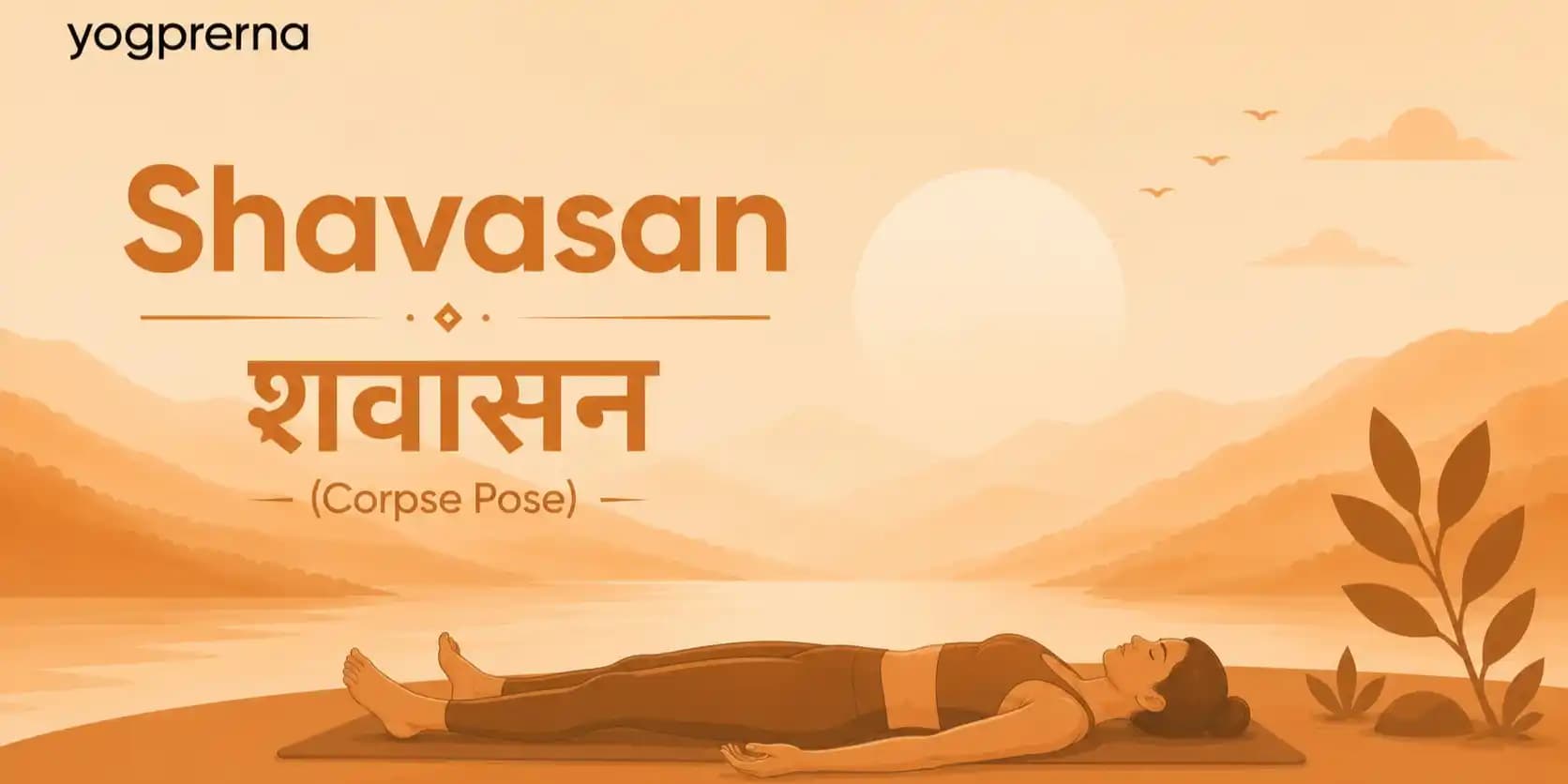
Savasana
Savasana, commonly known as Corpse Pose, is traditionally considered the most vital—yet paradoxically the most challenging—posture in physical yoga practice. While it appears to be simple rest, Savasana is an active state of conscious relaxation designed to integrate the physical, energetic, and mental shifts created during a practice. It systematically down-regulates the nervous system, shifting the body from a sympathetic ("fight or flight") state into a restorative parasympathetic ("rest and digest") state.
The structural goal of Savasana is absolute anatomical symmetry and minimal muscular effort. Lying supine on the floor, the spine rests in its natural curves without force. The legs spread to a comfortable mat-width distance, allowing the head of the femur to rotate externally in the hip socket so the feet fall open organically to the sides, completely releasing the inner thighs and pelvic floor.
The upper body is positioned to encourage maximum thoracic expansion and shoulder release. The arms rest comfortably away from the torso at roughly a 45-degree angle. Turning the palms upward facilitates external rotation of the shoulders, opening the collarbones and allowing the shoulder blades to lie flat against the mat. The neck remains long, with the chin slightly drawn in to avoid hyperextending the cervical spine.
Once the physical frame is settled, the muscular system surrenders all isometric control. The facial muscles—specifically the forehead, space between the eyebrows (Ajna region), eyelids, and jaw—soften entirely. The tongue drops away from the roof of the mouth. The diaphragm transitions from forced, deep pranayama back to an unhurried, natural, and unforced respiratory rhythm.
Triggers a deep parasympathetic response, lowering heart rate, reducing blood pressure, and decreasing cortisol levels.
Allows lactic acid to clear and muscles to absorb the structural benefits of the preceding postures without immediate stress.
Reduces mental fatigue, calms hyperactive brain waves, and helps alleviate symptoms of mild depression and insomnia.
Trains the mind to achieve state-level relaxation while maintaining sharp, unattached internal awareness without slipping into sleep.
Alignment Note: A common misconception is that Savasana is simply nap time. The true objective is Pratyahara (sensory withdrawal)—keeping the mind hyper-aware and present in the moment while the physical body experiences deep immobilization.
| Variation | Purpose | Description |
|---|---|---|
| Bolster Under Knees | Lumbar pressure relief | Placing a firm bolster or rolled blanket beneath the knee creases reduces anterior pelvic tilt, allowing the lower back to rest completely flat and tension-free. |
| Elevated Head & Chest | Acid reflux & breathing support | Supporting the upper back and head with a thin blanket helps individuals with respiratory discomfort or heartburn rest without strain. |
| Side-Lying (Garphasana) | Pregnancy & back comfort | Lying on the left side with a pillow between the knees provides a safe, comfortable resting alternative for pregnant practitioners or those with acute spinal pain. |
Savasana (Corpse Pose) is a restorative yoga posture performed by lying flat on the back with the arms and legs comfortably relaxed. It is traditionally practiced at the end of a yoga session to allow the body and mind to rest, recover, and absorb the benefits of the practice.
Savasana promotes deep relaxation, reduces physical and mental tension, calms the nervous system, and encourages mindful breathing. It helps relieve stress, supports recovery after physical activity, improves body awareness, and leaves practitioners feeling refreshed and balanced.
Lie flat on your back with your legs slightly apart and your feet naturally falling outward. Place your arms comfortably away from your body with the palms facing upward. Close your eyes, relax every muscle, breathe naturally, and allow your entire body to become still while maintaining gentle awareness of your breath.
Yes. Savasana is suitable for practitioners of all experience levels, including beginners. Although it appears simple, learning to relax the body completely while remaining mentally aware is an important skill that develops with regular practice.
Savasana is typically held for 5–15 minutes at the end of a yoga practice. Even a few minutes can be beneficial, while longer periods may provide deeper physical relaxation and mental calm.
Savasana is primarily a relaxation pose rather than a stretching or strengthening posture. It allows all major muscle groups—including the back, shoulders, hips, legs, arms, and neck—to release unnecessary tension and recover after physical activity.
Savasana is commonly associated with the Sahasrara (Crown Chakra) because it encourages deep relaxation, meditation, and a sense of inner awareness. Some yoga traditions also associate it with balancing the body's overall energy system.
Common mistakes include keeping the body tense, crossing the legs or arms, holding the breath, lifting the shoulders, or allowing the mind to remain overly active. The goal is to remain completely relaxed while maintaining gentle awareness without falling asleep if possible.
Most people can safely practice Savasana. However, individuals with lower back discomfort may place a bolster or rolled blanket under the knees for support. Pregnant practitioners, especially during the later stages of pregnancy, may find greater comfort lying on the left side or using supportive props instead of lying flat on the back.
Yes. Savasana is one of the most effective yoga poses for reducing stress and promoting relaxation. Slow, natural breathing combined with complete physical stillness helps calm the nervous system and encourages a peaceful state of mind. While it supports relaxation, it is not a replacement for professional treatment of stress-related conditions.