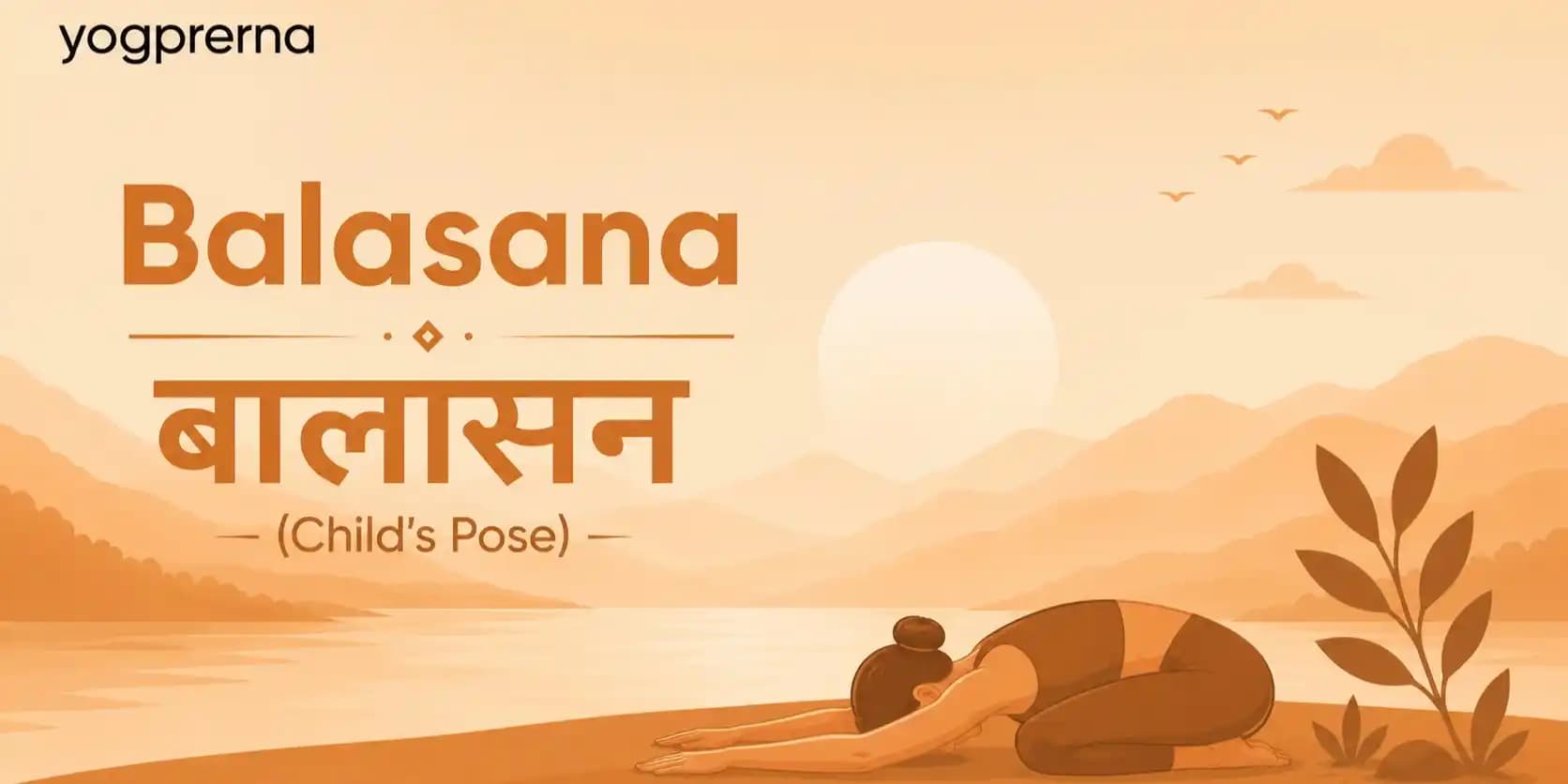
Balasan
Balasana is a restorative, grounding posture that gently stretches the back body while calming the central nervous system. It is commonly used as a resting pose between challenging postures or dynamic flows.
To perform the pose, kneel on the mat with your big toes touching and knees placed hip-width apart (or wider if preferred). Exhale as you lower your torso down between your thighs, bringing your forehead to rest softly on the floor. Extend your arms forward with palms facing down, or rest them backward alongside your torso with palms facing up. Allow your shoulders to relax down toward the floor, lengthen through the spine, and breathe deeply into the back of your ribcage.
Balasana (Child's Pose) is a gentle resting yoga posture in which the practitioner kneels, folds the torso forward over the thighs, and rests the forehead on the mat while extending the arms forward or placing them alongside the body. It is commonly used as a relaxation pose between more challenging yoga postures.
Balasana (Child's Pose) is a gentle resting yoga posture in which the practitioner kneels, folds the torso forward over the thighs, and rests the forehead on the mat while extending the arms forward or placing them alongside the body. It is commonly used as a relaxation pose between more challenging yoga postures.
Begin by kneeling on the mat with your big toes touching and knees together or slightly apart. Sit back on your heels and slowly fold your torso forward. Rest your forehead on the floor, extend your arms forward or place them beside your body, and breathe deeply while allowing your body to relax.
Yes. Balasana is one of the most beginner-friendly yoga poses. It requires minimal flexibility and is often recommended for people who are new to yoga. Beginners can place a folded blanket or cushion beneath the hips or forehead for additional comfort.
Most practitioners hold Balasana for 30 seconds to 3 minutes, depending on comfort and the purpose of the practice. During restorative yoga sessions, the pose may be held for even longer while maintaining slow, steady breathing.
Balasana gently stretches the lower back, hips, glutes, thighs, ankles, shoulders, and spine. While it is primarily a restorative stretch rather than a strengthening pose, it helps release muscular tension and improves flexibility throughout the back and lower body.
Balasana is most commonly associated with the Muladhara (Root Chakra) because it creates a feeling of grounding, safety, and stability. Some yoga traditions also associate it with the Ajna (Third Eye Chakra) due to the forehead resting on the mat, encouraging calmness and inward awareness.
Common mistakes include forcing the hips onto the heels despite discomfort, holding the breath, lifting the shoulders toward the ears, and straining the neck. The pose should remain comfortable, allowing the body to relax naturally without forcing the stretch.
People with recent knee injuries, severe ankle injuries, or significant hip limitations should modify the pose or seek guidance from a qualified yoga instructor. Pregnant practitioners, especially in later stages of pregnancy, should widen the knees to create space for the abdomen or choose an appropriate alternative.
Yes. Balasana is widely used as a calming and restorative pose. Slow breathing combined with the gentle forward fold helps relax the nervous system, reduce mental tension, and encourage a sense of peace and relaxation. While many people find it helpful for stress relief, it is not a substitute for professional mental health care.
Balasana can be practiced at any time of the day. It is commonly used as a warm-up, a resting pose between challenging yoga postures, or as a relaxing posture at the end of a yoga session to promote recovery and mindfulness.