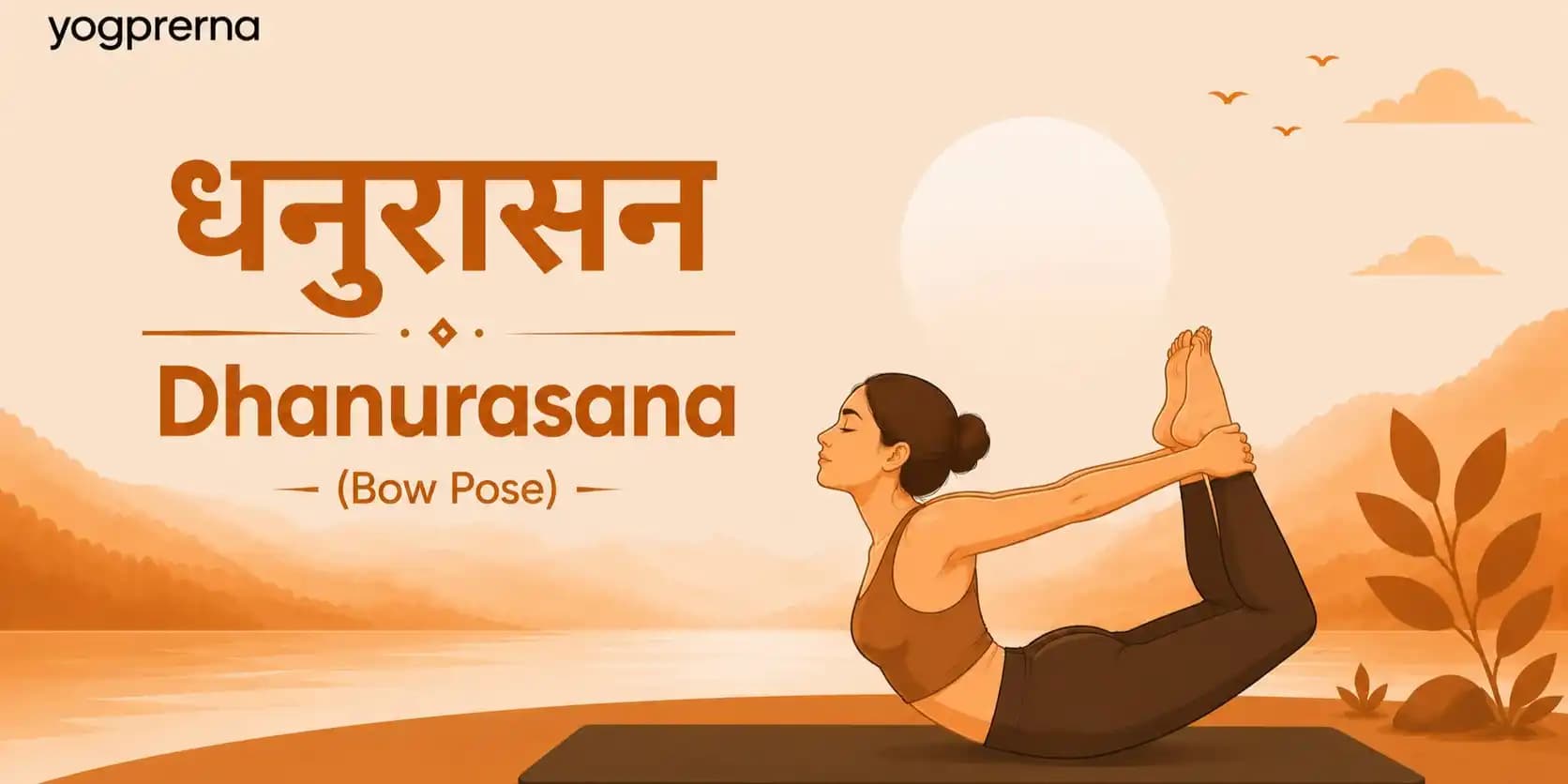
Dhanurasana
Dhanurasana—derived from Dhanu (meaning "bow") and Asana (pose)—is an invigorating prone backbend named for the taut, structural arch it creates. In this posture, the torso and thighs form the body of the bow, while the straight arms function as the tensioned bowstring. By combining the upper-body expansion of Cobra Pose (Bhujangasana) with the lower-body lift of Locust Pose (Salambhasana), Dhanurasana delivers an intense full-body stretch that stimulates the abdominal viscera while deeply strengthening the posterior chain.
The foundation rests entirely on the abdomen and pelvis, which act as the balance point against the floor. The legs remain hip-width apart throughout the movement, preventing pressure buildup across the sacroiliac joints.
The upward lift is driven dynamically by the lower body rather than pulled passively by the upper body. Flexing or pointing the feet while kicking the shins back and up away from the buttocks engages the hamstrings, glutes, and quadriceps. This powerful backward kick draws the hands, arms, and chest naturally off the mat without straining the shoulder joints. The knees are actively hugged inward to maintain parallel alignment over the ankles, preventing them from splaying widely to the sides.
The upper body responds to the lower-body tension by opening across the thoracic spine. Holding the outer ankles firmly allows the shoulders to roll back and down away from the ears, broadening the collarbones and expanding the pectorals. The neck remains a long, neutral extension of the spine with the gaze directed gently forward. Breathing directly into the abdominal area creates a natural, rhythmic rocking movement that massages the internal digestive organs.
Opens the entire anterior line, stretching the ankles, quadriceps, hip flexors, abdomen, chest, and throat simultaneously.
Strongly engages the erector spinae, gluteal muscles, hamstrings, and upper back rotators to build spinal resilience.
Balancing body weight on the abdomen directly compresses and massages the digestive organs, helping alleviate sluggish digestion and constipation.
Broadening the chest and stretching the intercostal muscles enhances diaphragm mobility and increases oxygen intake.
Alignment Note: A common tendency is to let the knees flare out much wider than hip-width during the lift. This pinches the lower back and reduces the leverage of the backbend. Actively squeeze the inner thighs toward each other to keep the legs parallel and protect the lumbar spine.
| Variation | Purpose | Description |
|---|---|---|
| Strap-Assisted Bow | Accommodation for tight shoulders/quads | Looping a yoga strap around the front of the ankles allows hands to hold the strap ends, enabling the lift without requiring a direct reach. |
| Parsva Dhanurasana (Side Bow) | Lateral torso stretch & organ stimulation | Rolling onto one side of the body while maintaining the bow shape massages the abdominal flank and deepens lateral opening. |
| Ardha Dhanurasana (Half Bow) | Targeted warm-up & lower back safety | Lifting one leg and the opposite arm at a time isolates single-side back muscle engagement while keeping the non-working side grounded. |
Dhanurasana (Bow Pose) is a classic backbending yoga posture in which you lie on your stomach, bend your knees, and hold your ankles while lifting your chest and thighs off the floor. The body forms the shape of a drawn bow, making it a powerful pose for improving flexibility, strength, and posture.
Dhanurasana strengthens the back, shoulders, legs, and core while stretching the chest, abdomen, hip flexors, and thighs. It helps improve spinal flexibility, opens the front of the body, enhances posture, increases body awareness, and supports healthy breathing by expanding the chest.
Lie face down on the mat with your legs hip-width apart and arms by your sides. Bend your knees and reach back to hold your ankles. Inhale deeply as you lift your chest and thighs off the floor while pressing your feet into your hands. Keep your shoulders relaxed, gaze forward, and breathe steadily. Exhale slowly as you release the pose and return to the mat.
Yes, but beginners should practice Dhanurasana gradually. If reaching the ankles is difficult, a yoga strap can be used around the ankles. Focus on lifting the chest without forcing the backbend and increase the depth of the pose over time.
Most practitioners hold Dhanurasana for 15–30 seconds or 3–5 slow, deep breaths. As flexibility and strength improve, the pose can be held for up to one minute while maintaining smooth, comfortable breathing.
Dhanurasana stretches the chest, shoulders, abdomen, hip flexors, quadriceps, and the front of the body. It strengthens the spinal muscles, glutes, hamstrings, shoulders, arms, and core, improving overall body strength and flexibility.
Dhanurasana is commonly associated with the Anahata (Heart Chakra) because it opens the chest and encourages emotional openness. It is also linked to the Manipura (Solar Plexus Chakra) due to the activation of the abdominal region and the development of confidence and inner strength.
Common mistakes include pulling forcefully with the arms instead of lifting with the legs, spreading the knees too wide, compressing the lower back, holding the breath, and lifting the shoulders toward the ears. Keeping the knees about hip-width apart and engaging the back muscles helps maintain proper alignment.
People with severe back pain, herniated discs, recent abdominal surgery, uncontrolled high blood pressure, hernia, serious neck injuries, or pregnancy should avoid or modify Dhanurasana. Anyone with shoulder or knee injuries should practice under the guidance of a qualified yoga instructor.
Yes. Dhanurasana strengthens the muscles that support the spine while stretching the chest and shoulders. Regular practice can help counteract rounded shoulders and the effects of prolonged sitting, contributing to improved posture.