February 21, 2026
5 months ago
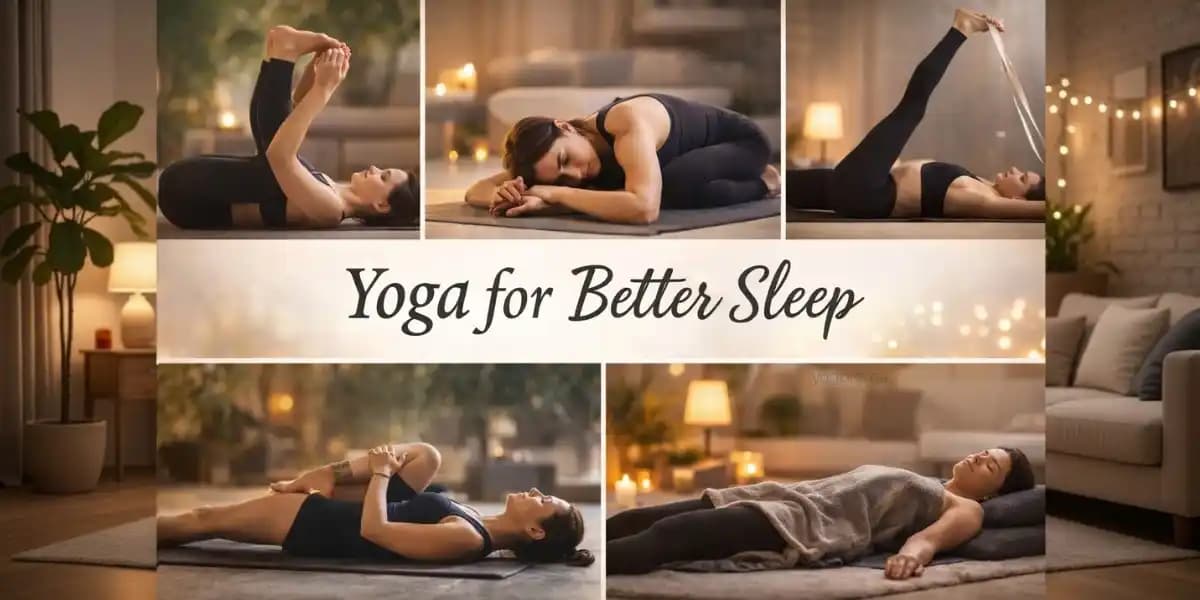
Yoga for Better Sleep & Insomnia – A Natural Way to Rest Deeply
If you struggle to fall asleep, wake up frequently at night, or feel tired even after sleeping, yoga can be a powerful natural solution. Unlike sleeping pills, yoga works on your nervous system, relaxes your mind, and gently releases physical tension — helping your body shift into deep rest mode.
Let's understand how yoga improves sleep and which practices work best.
Why Yoga Helps You Sleep Better ?
Yoga improves sleep by:
- Reducing stress hormones (cortisol)
- Calming racing thoughts
- Relaxing tight muscles
- Improving breathing and oxygen flow
- Balancing the nervous system
When your body feels safe and relaxed, sleep comes naturally.
Best Yoga Poses for Deep Sleep & Relaxation
-
Child's Pose (Balasana)
Child's Pose is one of the most calming yoga postures. In this pose, you gently fold your body forward while resting your forehead on the mat, allowing your spine, shoulders, and neck to relax completely.

This posture helps release physical tension built up during the day and signals the brain that it is time to rest. It also slows breathing naturally, which reduces stress and anxiety. Practicing this pose before bed can instantly create a feeling of comfort and safety, making it easier to fall asleep.
-
Legs Up the Wall (Viparita Karani)
This pose involves lying on your back with your legs resting vertically against a wall. It allows blood to gently flow back toward the heart and relaxes tired legs and feet.

Viparita Karani is excellent for calming the nervous system, lowering heart rate, and reducing mental fatigue. It is especially helpful for people who feel restless, anxious, or overthink at night. Just a few minutes in this posture can bring deep mental peace and prepare the body for sleep.
-
Seated Forward Bend
In this pose, you sit upright and slowly bend forward toward your legs while keeping the breath soft and steady.

This gentle stretch relaxes the spine, hamstrings, and lower back while calming the brain. It encourages introspection and quiets racing thoughts, which is very helpful for people who struggle with overthinking before bed. It also improves blood circulation and helps release emotional stress stored in the body.
-
Supine Twist
The supine twist is performed while lying on your back and gently twisting your body from side to side.

This posture relaxes the spine, massages internal organs, and supports better digestion, which is important for comfortable sleep. It also releases tension from the lower back and hips, areas where stress often builds up. The slow twisting movement helps calm the nervous system and promotes a sense of deep relaxation.
-
Restorative Rest Pose
This is a fully relaxed lying position, often supported with cushions or blankets, where the body completely lets go.

It allows muscles to soften, breathing to slow, and the mind to settle naturally. This pose is ideal just before sleep because it mimics the body's resting state. Practicing it regularly can improve sleep quality, reduce anxiety, and help the body recover from daily stress.
Breathing Techniques That Help You Fall Asleep Faster
Best breathing methods for insomnia:
- Slow deep belly breathing
- Alternate nostril breathing
- Long inhale and slow exhale rhythm
These techniques slow the heart rate and signal the brain to rest.
Benefits of Practicing Night Yoga Regularly
- Fall asleep faster
- Sleep deeper and longer
- Reduce night awakenings
- Lower stress and anxiety
- Wake up refreshed and energetic
Even 10 to 15 minutes every night can improve sleep quality within a few days.
Simple 10-Minute Bedtime Yoga Routine
- Gentle stretching - 3 minutes
- Relaxing poses - 4 minutes
- Deep breathing - 3 minutes
This routine is light and calming, perfect before sleep.
What to Avoid Before Sleeping?
- Heavy power yoga sessions
- Fast or forceful breathing exercises
- Using mobile phones right after yoga
- Drinking caffeine in the evening
Night yoga should always be slow and peaceful.
Frequently Asked Questions
Absolutely. These poses are simple, safe, and perfect for beginners of all ages.
Both work best together. Poses relax the body while breathing calms the mind.
Yes, gentle and slow yoga is best before sleep. Avoid intense or fast workouts at night.
Many people notice improvement within 3 to 7 days if practiced daily, especially with breathing and relaxation poses.
Yes, regular yoga helps relax the nervous system, reduce stress, and improve sleep patterns naturally over time without medication.