June 28, 2025
about 1 year ago
Important Asanas Of Yoga And Their Benefits
Asanas of Yoga
The Yoga Sutras by Patanjali, the earliest known yoga literature, was written more than 4,000 years ago and neither mentions nor describes any specific poses, but it does give us guidance on how to approach the practice, emphasizing the importance of our desires over specific poses.
But is it accurate to say that there are around 8.4 million Asanas used in yoga? In deep space, one of each type! Fortunately, only 84 of them matter, so we do not need to comprehend them all. Unfortunately, despite the names of all 84 being easily accessible, not all of them have been adequately described in the old manuscripts.
Therefore, certain Asanas are sadly lost to us forever, but on the plus side, some are not. In this short post, we will undoubtedly be focusing on this. However, firstly enables evaluating the fundamentals.
It appears that Patanjali never specifically referred to asanas in The Yoga Sutras, a major treatise on yoga, but rather discusses the fundamental components of the right sitting position as one of the Eight Limbs of Yoga.
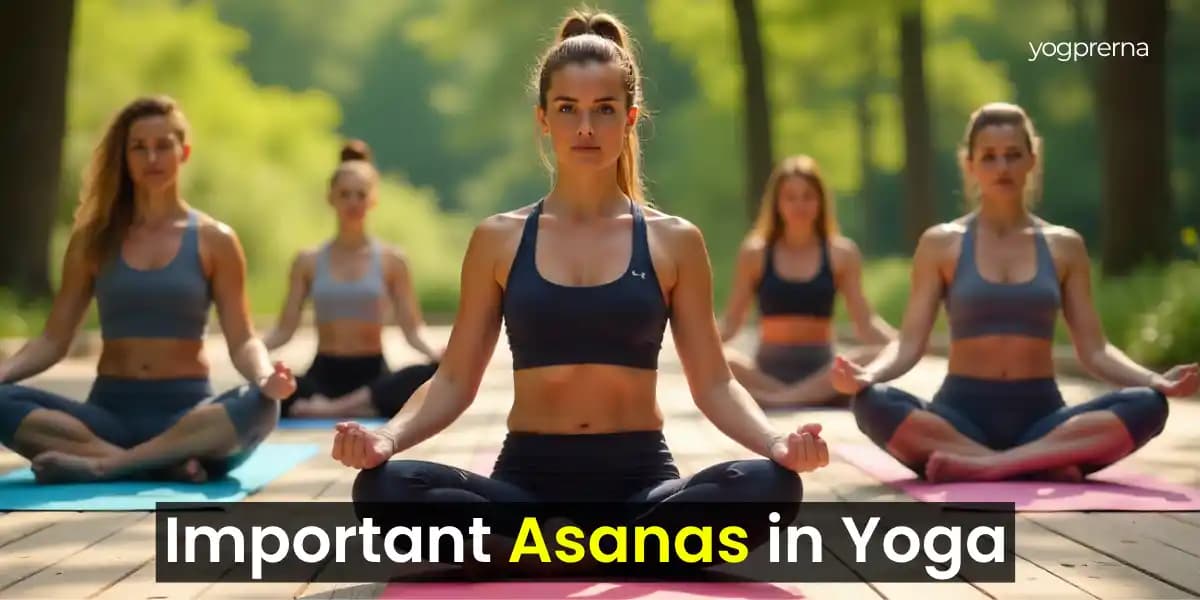
According to the Yoga Sutras, the four fundamental asanas are seated positions including Sukhasana, Padmasana, Vajrasana, and staff posture.
Out of the 84 asanas of yoga in total, let's read in-depth about some of the fundamental yoga positions.
38 Most Important Asanas of Yoga
-
Swastikasana or Auspicious Pose
An old Hatha yoga posture known as Swastikasana is utilized for cross-legged meditation. The swastika emblem, which is also an old Hindu moniker that denotes luck, signifies fortune in Sanskrit.
-
Shavasana or Corpse Pose
Shavasana, also known as the corpse pose or Mritasana, is a pose from Hatha yoga that is also employed in contemporary yoga. The goal of this type of exercise is often to wind down by performing standard Yoga Nidra meditation poses.
-
Chaturanga Dandasana or Four-Limbed Staff Pose
It creates the Surya Namaskar (Sun Salutation), in which the forearms are at right angles to the torso and the toes and palms maintain a straight body while remaining parallel with the ground.
-
Garbha Pindasana or Womb Pose
In Uttana Kurmasana, also known as the inverted turtle posture, the body points upward rather than being balanced in a vertical position.
-
Baddha Konasana or Butterfly Pose
It is a type of Hatha yoga sitting position known historically as Bhadrasana, and it is appropriate for modern yoga as a workout and a place to sit for relaxation.
-
Gomukhasana or Cow Face Pose
A sitting yoga stance known as Gomukhasana, or bull face pose, is occasionally employed in Hatha yoga and contemporary meditation.
-
Garudasana or Eagle Pose
In contemporary yoga, the Eagle pose or Garudasana is a type of standing balancing. In various medieval Hatha yoga positions, this name was utilized.
-
Sukhasana or Easy Pose
The eagle pose, or Garudasana, is a sort of upright balancing in modern yoga. This word was used in a variety of medieval Hatha yoga poses.
-
Setu Bandha Sarvangasana or Bridge Pose
Bandha Sarvangasana yoga is also known as Setu Bandha Sarvangasana, shoulder bridge, or just bridge, commonly referred to as the contemporary Bandhasana.
-
Dhanurasana or Bow Pose
In both Hatha and contemporary yoga, the bow position, or Dhanurasana, involves bending the back.
-
Sirsasana or Head Stand Pose
In classical Hatha Yoga, Sirsasana is an inversion posture often referred to as a headstand. It is considered one of the most important asanas and is commonly known as the “king of all asanas.”
-
Bhujangasana or Cobra Pose
Bhujangasana, or cobra pose, is a prone backbend posture in contemporary yoga. It is often practiced as part of a sequence and is sometimes used as an alternative to Urdhva Mukha Svanasana.
-
Padmasana or Lotus Pose
The lotus position is a cross-legged meditation posture that originated in ancient India. Each foot is placed on the opposite thigh. It is widely used in Hatha Yoga and meditation practices across Hindu, Tantric, Jain, and Buddhist traditions.
-
Siddhasana or Perfect Pose
Siddhasana is a traditional seated posture suitable for meditation in contemporary yoga. It is sometimes referred to as Muktasana, while a more relaxed variation is known as the Burmese Pose.
-
Natrajasana or Lord of the Dance Pose
Natrajasana is a balancing posture in contemporary yoga that combines stability with a graceful backbend. It is inspired by Lord Shiva as Nataraja, the cosmic dancer, and is often associated with classical Indian dance forms like Bharatanatyam.
-
Utthita Parsvakonasana or Extended Side Angle Pose
The modern yoga posture Utthita Parsvakonasana works a variety of lateral angle muscle groups, including the groin, chest, lungs, shoulders, spine, and belly.
-
Vajrasana or Thunderbolt Pose
Kneeling positions are common in Hatha and contemporary yoga, such as Vajrasana, Thunder Pose, and Diamond Pose. Various stances were referred to by this name in medieval writings. With calves tucked beneath the thighs, a practitioner sits on the heels. The first toes touch, and the body remains upright with a small gap between the kneecaps.
-
Halasana or Plow Pose
In Hatha and contemporary yoga, the plow pose, or Halasana, is an inverted position. Variations like Karnapidasana involve bringing the feet closer to the ears near the knees.
-
Tadasana or Mountain Pose
Although it is not mentioned in the ancient Hatha Yoga literature, the standing stance known as Tadasana, also called mountain pose or Samasthiti, provides the basis for many other standing poses.
-
Bhairavasana or Formidable Pose
Bhairavasana, also known as the magnificent position or Supta Bhairavasana in the Kala Bhairavasana variation, is similar to Vasishthasana. It involves maintaining balance with one arm and one straight leg. Bhairava is one of the eight incarnations of Lord Shiva. Ankushasana, meaning “elephant goad pose,” is another name for this position.
-
Viparita Dandasana or Inverted Staff Pose
Viparita Dandasana is a reverse yoga pose performed in an inverted position. It can be practiced with either one foot or both feet placed on the ground.
-
Virabhadrasana or Warrior Pose
Virabhadrasana, or the position of the warrior, consists of 12 steps. The associated asana in contemporary yoga is a routine honoring the virtues of the legendary warrior Virabhadra. Despite the fact that this pose's name is derived from Hindu mythology, it wasn't until the 20th century that it was described in the Hatha Yoga canon.
-
Navasana or Boat Pose
Boat posture, Paripurna, or Navasana. In contemporary yoga, Navasana is a practiced seated position.
-
Jathara Parivartanasana or Revolved Abdomen Pose
Jathara Parivartanasana involves rotation of the abdomen and spine. In contemporary yoga, it is performed in horizontal asanas focusing on twisting and core engagement.
-
Salabhasana or Locust Pose
Salabhasana, often known as the grasshopper pose, is a backbend in contemporary yoga.
-
Surya Namaskar or Sun Salutation
Sun salutation , also known as Surya Namaskar, is a yoga-like posture sequence made up of roughly twelve intricately linked asanas. Although similar exercises were practiced in India prior to the early 20th century, the asana pattern was first documented as yoga.
-
Trikonasana or Triangle Pose
It is a form of contemporary yoga asana. Parivritta Trikonasana and Baddha Trikonasana (triangular shape) are variations.
-
Chakrasana or Wheel Pose
Yoga asanas to practice include Chakrasana, the wheel posture, and Urdhva Dhanurasana, the rising arch stance. This is the last and opening position of the backbend. It allows the spine to be very flexible. The term “bridge” refers to this position in acrobatics and athletics.
-
Upavishta Konasana or Wide-Angle Seated Pose
Curl your toes and push forward while sitting bolt upright with your legs as wide as possible.
-
Utkatasana or Chair Pose
Modern yoga's chair posture, or Utkatasana, is a static position. In ancient Hatha Yoga, this position is known as a low squat.
-
Utkatasana or Chair Pose
Modern yoga's chair posture, or Utkatasana, is a static position. In ancient Hatha Yoga, this position is known as a low squat.
-
Ustrasana or Camel Pose
Modern yoga practices Ustrasana, also known as camel position, as a post-bend stance.
-
Uttanasanaor Standing Forward Bend Pose
You can perform Padahastasana instead of Uttanasana, or upright forward bending if your modern toes are used for toe flexion.
-
Vrikshasana or Tree Pose
There is equilibrium in the tree posture. It is still a well-liked practice in contemporary yoga and was one of the few upright poses in ancient hatha yoga.
-
Ashtanga Namaskara or Eight-Limbed Pose
Surya practiced balancing the torso on eight points of direct contact with the ground: the feet, knees, chest, chin, and arm.
-
Anantasana or Sleeping Vishnu Pose
Anantasana, also known as the Sleeping Vishnu Stance or the supine leg pose in modern yoga, is an exercise position.
-
Bidalasana or Cat Position
Sanskrit for “cat position,” Bidalasana or Marjaryasana is a contemporary kneeling practice. Tiger position, or Vyagrasana, is the one-legged stretch. In order to create contrast, the cow pose, or Bitilasana, is frequently used. It is normal practice to repeatedly switch between cow and cat positions.
-
Balasana or Child Pose
Modern yoga uses the kneeling position known as Balasana, also known as children's posture or children's relaxing pose, as a practice. Balasana is a variety of asanas that are typically performed before and after Sirsasana.
Conclusion
While practicing yoga has many positive effects on the body and mind, it is not a replacement for medical care. It's crucial to study and practice yoga poses under the guidance of a certified yoga instructor. Yoga poses should only be performed in the event of a medical problem after contacting a physician and a yoga instructor. This article talks about the most followed ways of Yoga and its types. We hope it is useful to you and if you want to make any improvements to this article, let us know in the comments section.
May You Like - Dhyana Yoga || Balayam Yoga || Bhakti Yoga || Patanjali Ashtanga Yoga